For many archaeologists, myself included, fieldwork is one of the best parts of our job. It is often the aspect of archaeology that first drew us in, capturing our spirit, and the bit that we daydream of as we sit through long seasons of writing at our desks. In popular imagination archaeological fieldwork is associated with trowels, buckets, sunscreen and hats, remote places, adventure and discovery. For undergraduate archaeology students it can overwhelmingly be about recording, stratigraphy, identification of finds, learning to crouch awkwardly in a one-meter squared trench and navigating the social bond of the ‘field team’. For principal investigators like me it also involves risk assessments, health and safety, long grocery lists, discovering the art of cooking for 20 hungry people and endless logistics.
While archaeological fieldwork is all of this, it is also so much more. Although research and learning does take place ‘at the trowels edge’, so to speak, it also happens in much more diffuse ways. This may be experientially, through doing new things and being in new places and through social interactions and exposure, inspiring new ways of thinking. In our recent fieldwork seasons in Mozambique, we learnt so many things, discovering new materials and sites that will certainly be important for our knowledge of this region. We also learnt a lot about how to undertake research, how to work together as a team and how to collaborate. These lessons came in different forms and from a variety of actors. One particularly poignant lesson of our season, a lesson on listening, came from the ancestors of Ngomene Nhanimela.
Ngomene Nhamimela is an archaeological site located in the province of Inhambane. Tucked away in the dense coastal thicket of Inhambane, it is barely visible on satellite imagery and requires very good knowledge of the local area to locate. The site is madzimbabwe, a stone walled site associated with the precolonial state of Great Zimbabwe. It only recently became known to archaeologists, through a visit by previous researchers in 2017, and our research was to be the start of the first formal work conducted on the site.
Our first visit to Ngomene was scheduled for Friday the 23rd of August, 2024. This visit had been preceded by a significant amount of planning and a set of important formalities. Our archaeological research permit had been approved by the Ministry of Culture and Tourism, and we had been in communication and had confirmed permission to visit the site from the leaders of the local community of Nhanimela. The final step in the process was an in-person meeting with the leaders to perform a ceremony for the ancestors of the Ngomene Nhanimela.
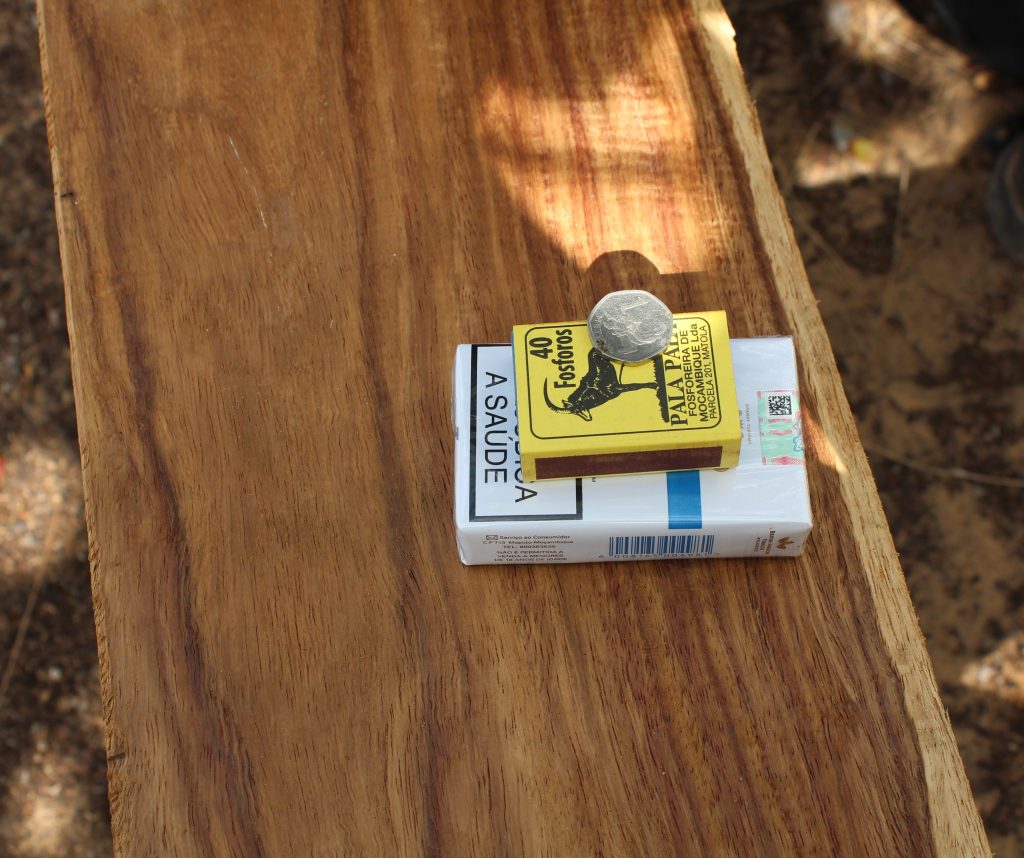
This event was organised for Friday, a day that would not interfere too much with the schedule of the leaders. We had been instructed to provide a variety of goods, including tobacco, coins and Portuguese wine for the ritual. We woke up early on the 23rd and set off from Vilankulo as the sun rose. After an hour and a half of driving, and much anticipated chatter, our team member Luís confirmed that we were nearing the agreed meeting point, the small shop at the turn off from the main road. On arrival at the turnoff, however, we soon realised something was amiss. Two ladies who were at the shop told us that the community leaders had waited for us there yesterday. They had eventually left in the afternoon, unhappy about our lack of appearance, and were not expecting us today.
After explaining the honest misunderstanding and profusely apologising we asked the two ladies to direct us towards the leader’s house, hoping for an opportunity to apologise in person. They climbed into the car and we followed their directions, winding down sandy roads, past homes and fields, the screeching of thorns on the car doors a reminder that these roads were not well travelled. After an hour of driving on thick sandy paths and some close calls with angry branches we reached the leader’s home. However, he was not there, nor was he answering his phone, and his family could not confirm when he would be returning.
Disappointment seeped in, with expectation slowly turning to frustration. After some discussion we asked for directions to the home of the family that lived next to the archaeological site. This is the home of Osvaldo, a person whom we would come to know well over the next few weeks. His home sits at the base of the low ridge on which the site of Ngomene was built. As a child Osvaldo spent many hours playing in the walls of Ngomene while herding goats, and we would come to learn a great deal from him.
Arriving at Osvaldo’s home, we found him sitting outside. He listened patiently to our story of the misunderstanding and long journey we had travelled but insisted that he could not take us up to the site without the permission of the local leader. We pleaded with him that we would just like to set our eyes on the site, and assured him that we would return the next day for the ritual and meeting.
After some reluctance he finally relented. What would be so bad about having a look at the site, we thought? He instructed us to get back into the car to drive a short distance (perhaps 500m) to the base of the hill. Much buoyed, we drove along with excitement. However just a few meters before the agreed parking spot the car came to a sudden halt with a loud and distinct popping sound, followed by the sound of air gushing. We climbed out to watch in horror as the front tyre deflated at a rapid pace.
It was a surreal moment, standing next to the car watching the tyre deflate, a strange sense of fate prickling my skin. We looked at each other in a mix of shock and awe, and it was apparent on many faces that we had the same thought. How was it possible to drive through kilometres of sandy, thorny road only to get a flat tyre here? And at the base of the hill? What were the ancestors telling us?
Once we had overcome the initial shock the spare tyre was taken out of the back, and we worked hard to dig the tyre out of the sand and fit the new one. After a short while two figures appeared on the hill above us and slowly walked down to watch us quietly from a distance. Once the new tyre was fitted the two men stepped forward and introduced themselves as the leader and his relative. As we shared a drink of water and some biscuits they articulated what we had feared to verbalise; we had not respected the formalities of the ancestors, we had not waited for the leader and undertaken the rituals, and they had literally stopped us in our tracks.
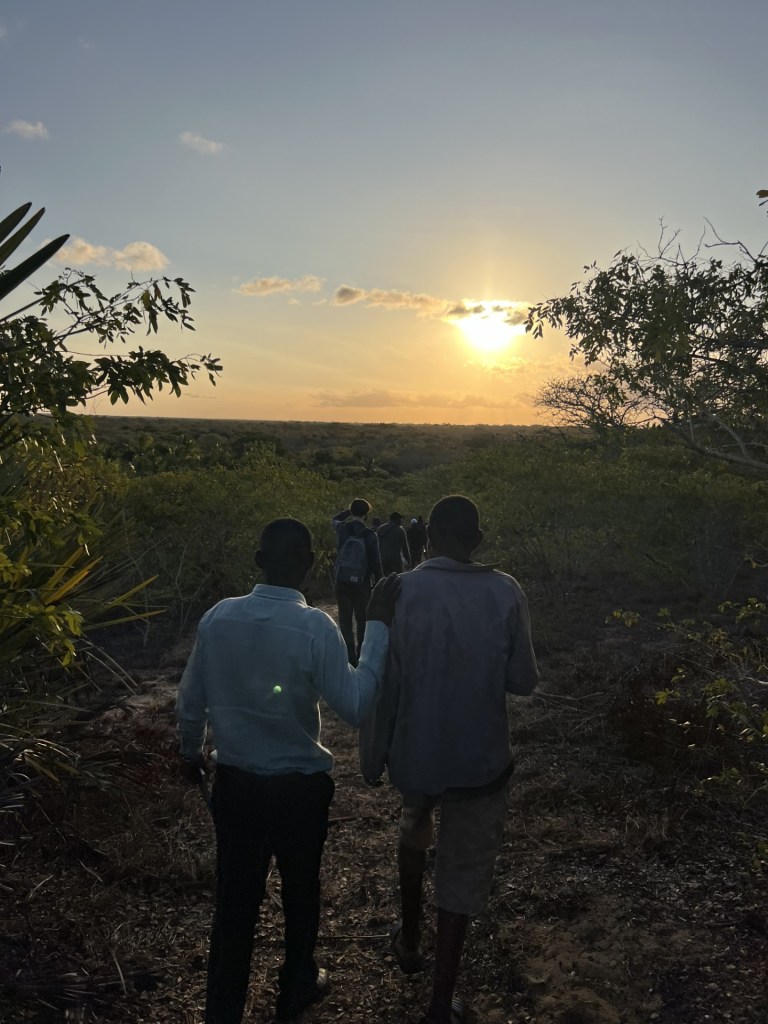
We stood together and spoke for a long time, and after some time they offered to take us up to the top of the hill where we could sit down on some benches near the site. As we sat down in a clearing on the wooden benches that had been carefully carried up by Osvaldo for our meeting, we looked over the wide expanse of treetops below us. The sun was already lowering in the sky and I felt the majesty of the landscape, and a sense of wonder at the day. I reflected on how we had not listened carefully and respectfully, and it had taken an intervention to stop us for me to realise it.
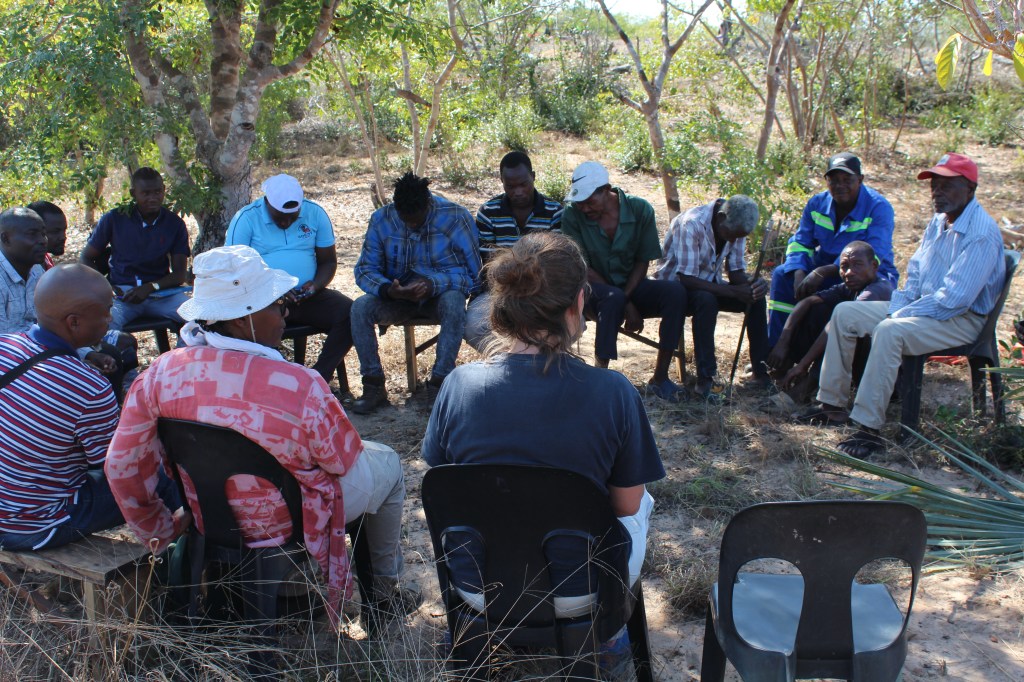
The following day we returned at mid-morning and performed the ritual for the ancestors at the base of the hill. The oldest member of the community led the ceremony. He placed the offerings we had brought at the base of the tree and poured locally brewed palm wine over them. He then addressed the ancestors and told them what we were here to do. He asked that they did not harm us, explaining that we were not the enemy, and that we came in peace. He then broke tobacco at the base of the tree and offered a glass of the wine for everyone to sip.
Reflecting on the experience has provided a chance to think through the varied ways we learn as archaeologists, and the importance of recognising this in our research practice and teaching. Learning comes in many forms and guises. We have since got to know the leaders and community of Nhanimela much more closely and have learnt so much through our engagements with them, the site and the landscape of Nhanimela. Through listening, deep listening, we have come to hear how people in the region understand the site, and their relationship to it. By listening we also learn how to undertake genuine and respectful collaboration. No doubt we have many more lessons to learn, but I am deeply grateful and awed by the power of this one.
 Entangled Project