In this blog post, Entangled Project Collaborator Júlio Machele highlights a small selection of the historical information that we have about this region. Historical texts, oral histories and linguistic evidence can be combined with archaeological research to provide a more detailed understanding of this region’s past.
The research of the Entangled project takes place in the present-day province of Inhambane (Bazaruto Archipelago and Chibuene), an area that may once have had a close relationship with the ancient sheikhdom of Sofala, potentially founded by Arab-Swahili traders as part of the Zimbabwean gold trade from as early as the 8th century AD, before coming under the influence of the Portuguese who arrived at the end of the 15th century (Mitiua, 2023). However, the exact nature of these relationships, and the origins of Sofala, remain unclear.
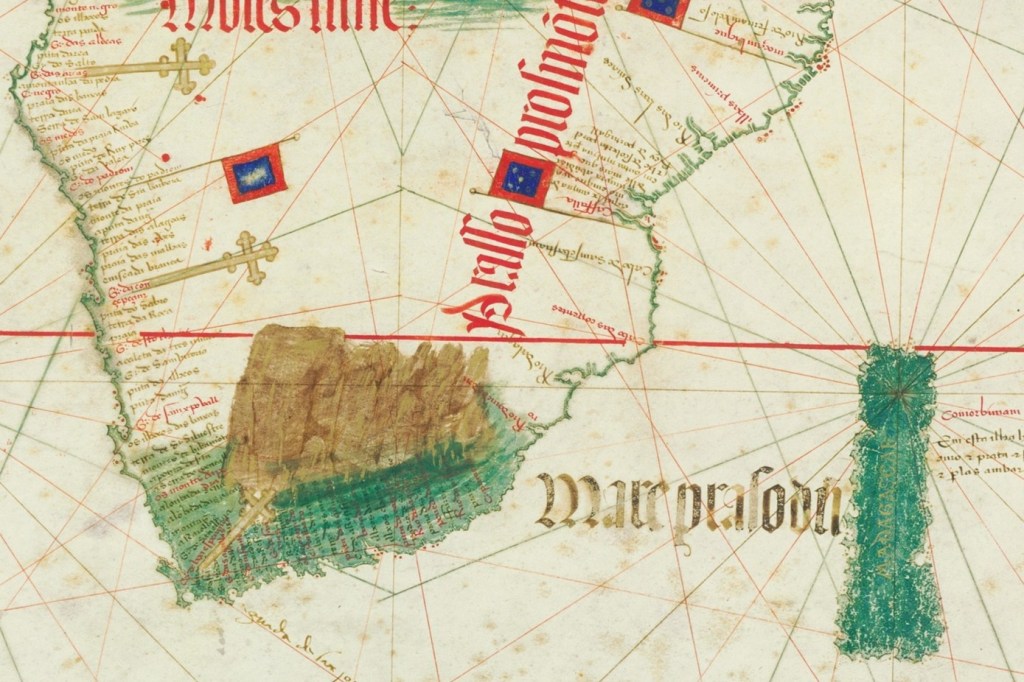
When Vasco da Gama and his crew, in search of a maritime route to India, anchored at the Inharrime River on the 11th of November 1498, they named it Nyambane or Inhambane (Theal, 1901, p.91). They also used the name Inhambane as the title of the king of that area, el rei de Inhambane, as the chief Gwambe was incorrectly called (Theal, 1898, p.421; Leisegang, 1990, p.60). Gwambe seems to have been a chieftain of Karanga origin that may have been related to the dominant clan of the State of Great Zimbabwe (Liesegang, 2014, p31). In subsequent contacts with the Portuguese, Jesuits like Gonçalo da Silveira, André Fernandes e André da Costa left some written records about their relationship to the local population.
But long before the Portuguese, the region was already connected to the Islamic World, perhaps through direct interaction with arabo-persian merchants, referred to in Portuguese documents as Mohammedans and locally as Mwenye, from mwinyi or muyini, meaning an important person or land owner, or the person that first arrives on a territory (Mattos, 2019, p.7; Bonate, 2007, p32-41). Variations include mwene and muno, but the Portuguese came to use the term monhé (Bonate, 2007, p.41).
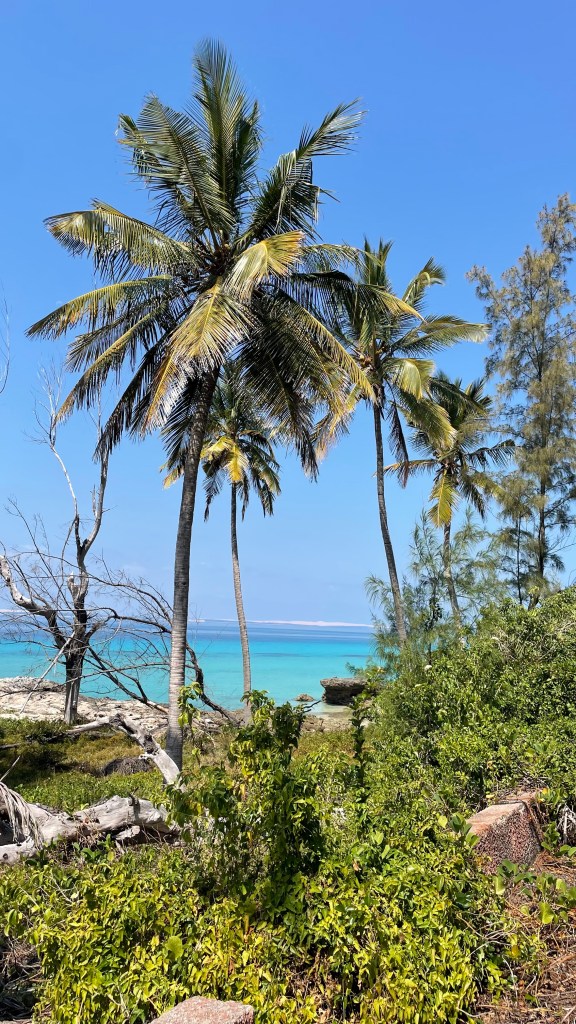
As a result of these contacts, there emerged communities which the Portuguese would call black moors, some of whom spoke Arabic while others used the language of the land, (Silva, 2012, p.59), the chioca language (Rita-Fereira, 1959, p.59) whose speakers appear in the written record as khokha. The islands that make up the Bazaruto Archipelago are referred to as the Greater and Lesser Uziquas, Hichicas, Bochicas or Vusicas. Ahmad ibn Majid, an Arab navigator whose accounts date between 1475 and 1480, refers to washika as the ‘best of the islands of Bazaruto’ (Khoury 1983: 80, verso 583, cited by Liesegang 2014, p.24). Hucicas, Vusikas, Bochicas ou wasika derives from the name of the owner(s) of the island(s), as Vu- (or Vhu-) is a Ndau or Teve prefix for countries, lands (or locative) (Leisegang, 2014, p.28). The term with its variations comes from the verb ku-xika which means ‘to descend’, that is, it refers to a people that descended from a mountainous region.
The local populations integrated into international trade, providing various foodstuffs (meats, rice, ginger and other vegetables, etc.), ivory, gold dust, ambergris, pearls, seed-pearls, dugong and hippopotamus teeth, rhinoceros horn, turtle shell (from which earrings, chests, spoons and “other curious and rich pieces” were made in India), honey, gum, butter, and enslaved people. In return they received mainly beads and cloth (Santos [1609] cited by Theal, 1901, p.140-141, 145).
Sources
Bonate, Liazzat J. K. Traditions and Transitions: Islam and Chiefship in Northern Mozambique ca. 1850-1974, Ph.D., Department of Historical Studies, University of Cape Town, Cape Town, 2007.
Ehret, Christopher, An African Classical Age: Eastern and Southern Africa in World History, 1000 B.C. to A.D. 4000 (Oxford: James Currey, 1998).
Erskine, Vicent, “Journey to Umzila’s, South-East Africa, in 1871-1872”, The Journal Royal Geographical Society of London, 45, 1875.
Exelson, Eric, Portuguese in South-East Africa, 1488-1600 (Johannesburg: C. Struik (PTY) Ltd, 1973).
Liesegang, Gerhard, “Achegas para o estudo das biografias de autores de fontes narrativas e outros documentos da história de Moçambique, II, III: Três autores sobre Inhambane, vida e obra de Joaquim de Santa Rita Montanha (1806-1870), Aron S. Mukhombo (ca. 1885-1940) e Elias S. Macambe (1906-1969)”, Arquivo, 8, Out 1990
Liesegang, Gerhard, “East and Northeast of the Borders of the Southeastern Bantu: Partly Visible Population Movements and Invisible Lineage States: Interdisciplinary Approach to Political Organization, Archaeological and Linguistic Traces and Memory in Southern and Northern Mozambique ca. 400-1900 AD” (Maputo: University Eduardo Mondlane, July, 2014), unpublished (available at: https://www.academia.edu/7688040/Borders_of_SE_Bantu_400_1900).
Mattos, Regiane Augusto de, “Batuques da terra, ritmos do mar: expressões musicais e conexões culturais no norte de Moçambique (séculos xix-xxi)”, Revista de História (São Paulo), n.178, 2019.
Mutiua, Chapane, “A History of a Travelling Qur’an Manuscript in Inhambane, Mozambique”, Islamic Africa, 14(1), 2023.
Rita-Ferreira, António, The Ethno History and the Ethnic Grouping of the People of Mozambique (Lisboa: Junta de Investigação do Ultramar, 1959).
Theal, George McCall, Records of South-Eastern Africa: Collected in Various Libraries and Archive Departments in Europe. Vol. II (London/Cape Town: William Clowes and Sons, Limited/The Government of Cape Town, 1898).
 Entangled Project
.jpg)