The Entangled team have now finished what was a thrilling and successful second field season in Inhambane! Our fieldwork continued at the site of Ngomene Nhanimela, located approximately 100 km south of Vilankulo. In the second week there we were joined by Dr Mussa Raja from Eduardo Mondlane University (UEM) and Dr Manuel Tangune. With special permission from the provincial government, Dr Raja and Dr Tangune undertook lidar and drone mapping of the site and surrounding area, gathering amazing spatial and landscape data by air.
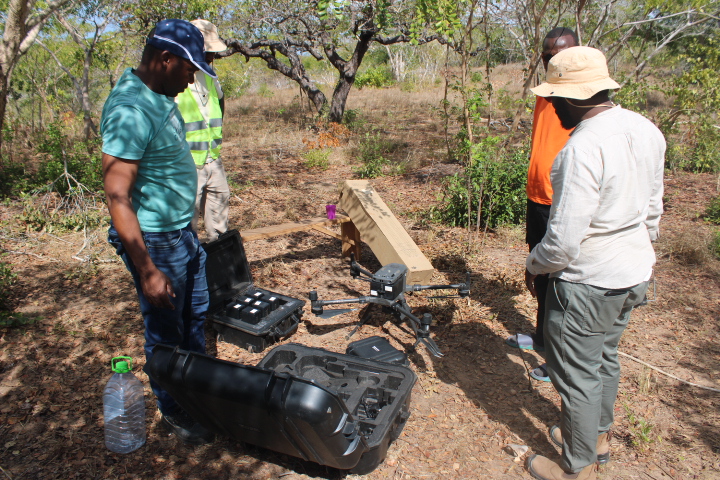
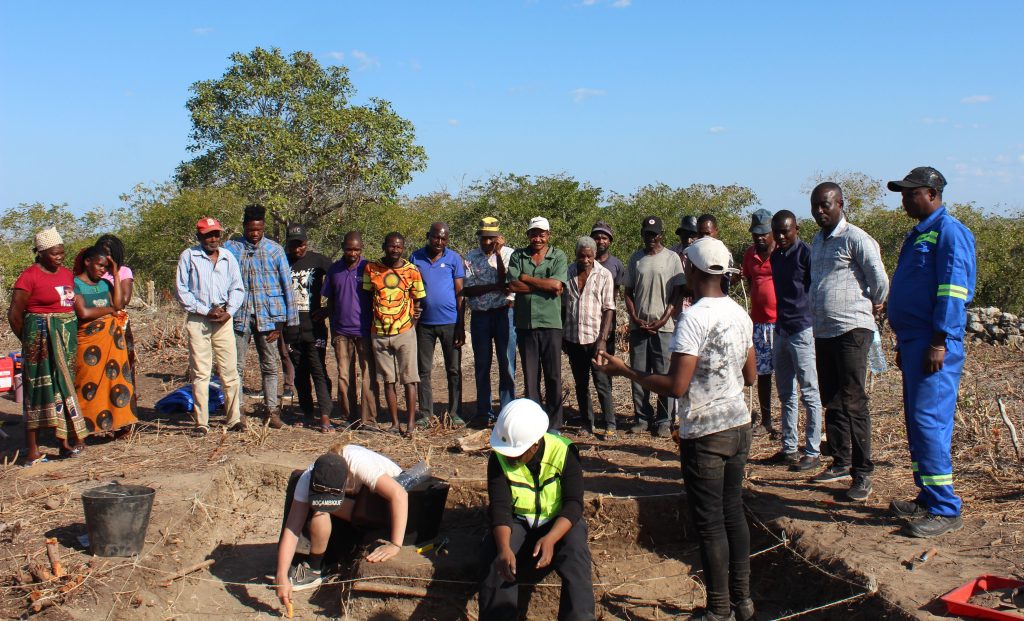
The excavation team continued to focus on areas both inside and outside of the stone walled enclosure, recovering exciting materials and architectural details of this fascinating site. We can’t share too much more at this point, but we excitedly working on our findings and hope that our forthcoming publications based on this research will contribute toward redefining the Zimbabwe culture and precolonial African urbanism.
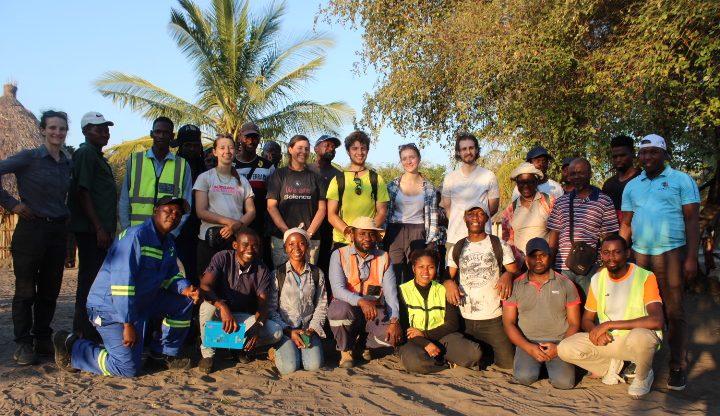
Our fieldwork was done in collaboration and coordination with the local community of Nhanimela. Along with the participation of community members at the field site and the interviews undertaken by Scott and Claudio, we also visited the primary school and hosted a community open day. This relationship between community and project members has been an enriching one for all the project members, and we look forward to continuing to learn from and support the community of Nhanimela.
For the second half of the field season we moved from the inland to the coast, where we focused our research activities on the Bazaruto archipelago. This research was undertaken in collaboration and with the support of AfricanParks and again in close coordination and cooperation with various community leaders on Bazaruto and Benguerra islands. Known for its unique marine resources, (perhaps the most famous species being the elusive dugong), the Bazaruto archipelago also has rich and underexplored heritage of maritime trade and commerce dating back at least 1000 years. Guided by oral histories, early Portuguese texts and our previous visit our research efforts focused on surveying and excavating different parts of the island to uncover the role of the islands, how they were linked to mainland, the nature of archaeological occupation and evidence of trade through time.
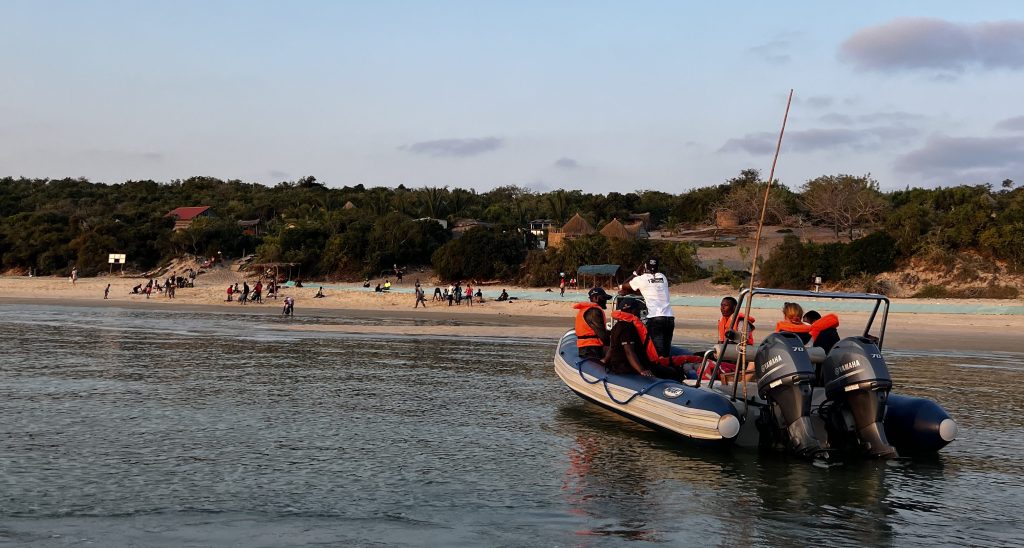
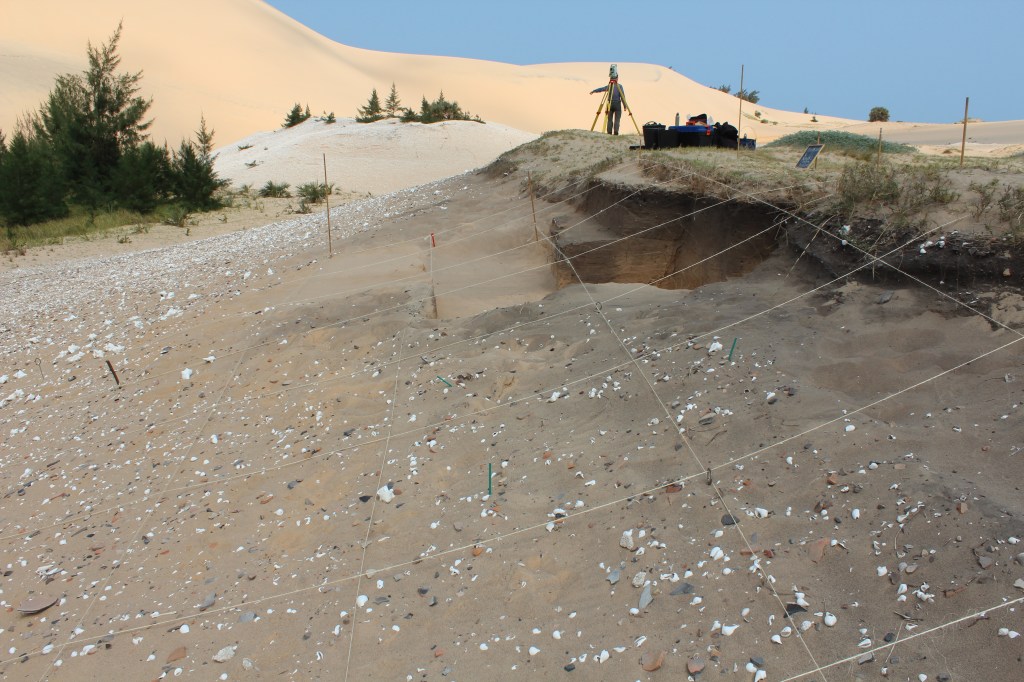
Fieldwork on the islands was at times hard work: climbing high sand dunes, walking long distances, and of course keeping an eye out for the freshwater crocodiles that inhabit the inland lakes! We undertook excavations on Bazaruto and Benguerra with very promising results. While there is more to be done to analyse our findings, we are hopeful that we have a new piece to the story of early maritime trade in the region – do watch this space for more news! Our historical interviews confirmed the centrality of fishing and maritime activities and our stay at the AfricanParks research station at Sitone allowed us to engage with local fishing communities and experience life on the island in a unique way.
On a final note, one of the big takeaways from this year’s fieldwork was an awareness of how archaeological fieldwork is so much more than just the scientific study of the past. It is a chance to build collaborative research practices, to learn from each other across language and cultural differences and certainly it is a chance to grow. We are especially grateful to all the fieldwork team for their hard work, good humour, enthusiasm and openness to learning and sharing with each other.
 Entangled Project