2024 was an exciting first year for the project, in which we built our team, embarked on our first fieldwork season, (re)discovered objects and texts, formed and strengthened collaboration relationships, and connected with audiences and communities through events, conferences and publications. We are excited to share some of the progress we’ve made and the valuable insights we’ve gained during our first year of research!
Welcoming New Team Members
In May 2024, we welcomed Dr. Joanna Lawrence as our Project Coordinator. With her experience as an archaeologist, Joanna has been instrumental in planning and organizing our fieldwork and keeping track of the day-to-day administrative tasks, ensuring everything runs smoothly. Her organizational skills have been a great help.
In late July, Dr. Scott Dunleavy joined our team as a Postdoctoral Researcher in Historical Archaeology of Southern Africa. Scott, who recently completed his PhD on “Firearm Adoption in the Societies of the Lower Zambezi, 1600-1888” at the University of Cambridge, has a background in history, but his enthusiasm for archaeology was evident from the start. Just two weeks after joining the project, Scott travelled with the team to Mozambique for our first field season, where he made valuable contributions to our work in the field.
Fieldwork
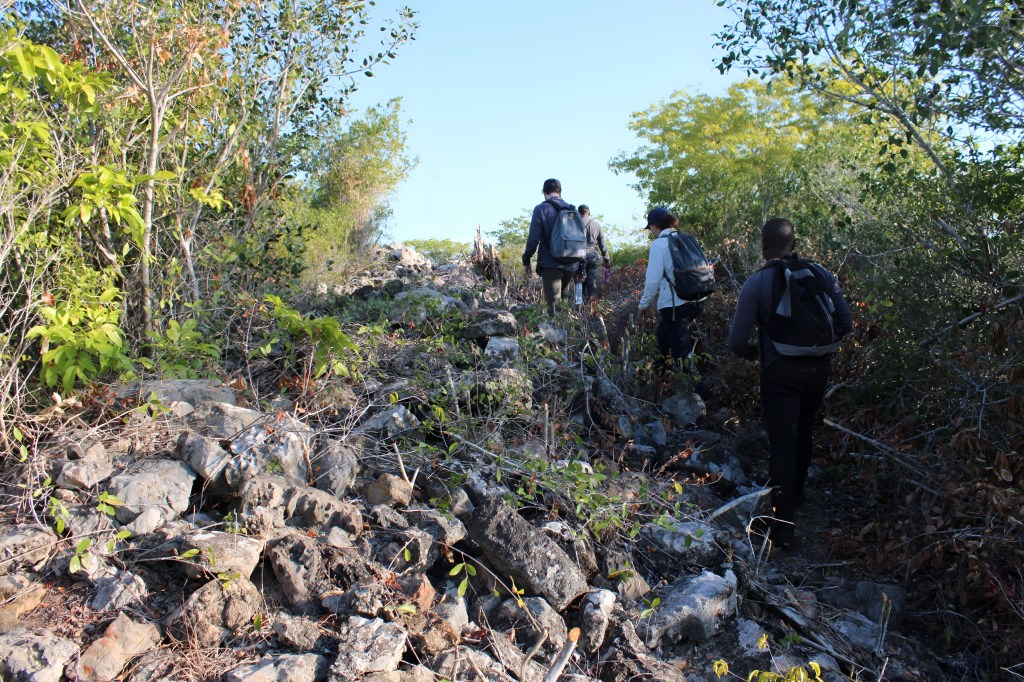
In August 2024, we conducted fieldwork in the Vilankulo region of Mozambique, where we carried out archaeological surveys at several key sites, including Manikenyi, Chibuene and Bazaruto. This fieldwork involved team members from both the University of Cambridge and UEM: Dr. Abigail Moffett, Dr. Scott Dunleavy, Prof. Solange Macamo, Celso Simbine, Pedro Moiane, Cláudio Mandlate, Hamido Atuia, and Berta Macamo, as well as Luís Chaúque from the Inhambane provincial government.
We also visited the exciting site of Ngomene, a Zimbabwe type site located south of Vilankulo. Here we undertook an initial survey and test pits, with promising results. We are really excited by the site and look forward to doing further research there.
Not all of Entangled’s 2024 fieldwork took place under the open sky however. In December, Scott spent several weeks in Lisbon consulting the collections of two archives: Arquivo Histórico Ultramarino, Lisbon, and Portugal Biblioteca da Ajuda, Lisbon, Portugal. His findings there are helping us to both plan and contextualise our upcoming excavations.
Engagement and Outreach
One of our main goals last year was to engage with both academic and local communities. In May, Abigail and Professor Macamo co-hosted a launch event for the ENTANGLED project at Eduardo Mondlane University in Maputo, Mozambique. This was an opportunity to share our vision and plans for the project with local scholars and stakeholders. In November, we held a similar event in Cambridge, UK, which allowed us to connect with the academic community here and introduce them to our work.
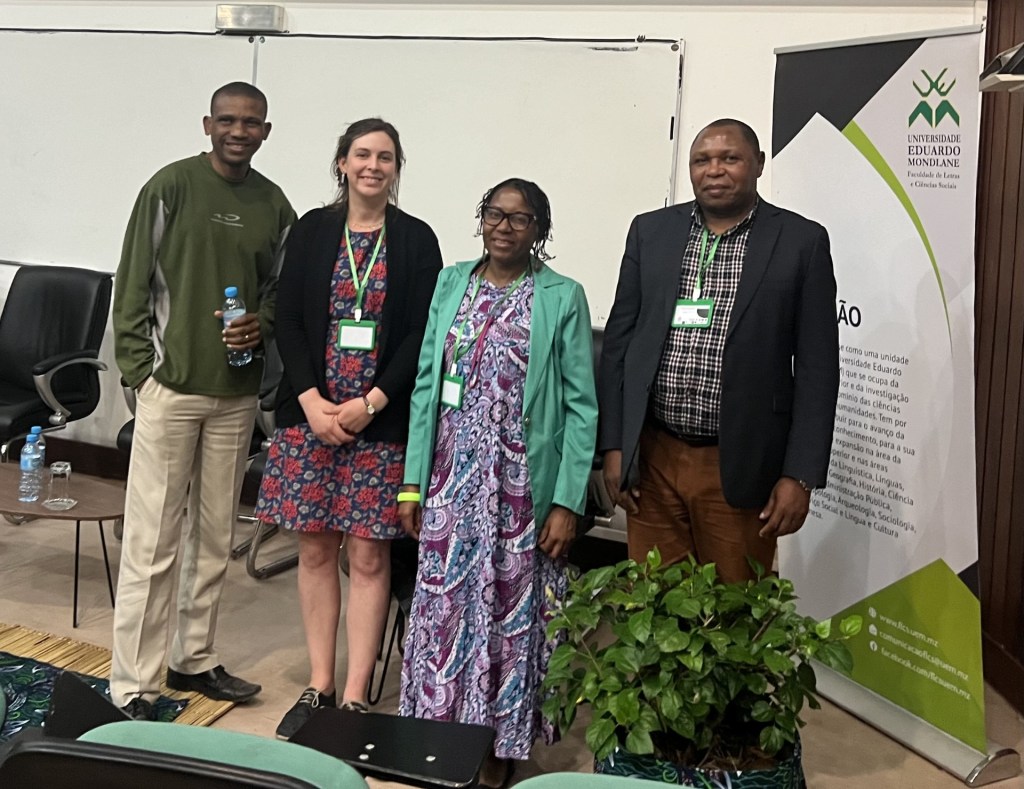
We also co-organized the Envisioning Decolonial Futures through Archaeology conference in October 2024 at Cambridge, which fostered important discussions on the role of decolonization in archaeology. This conference was co-organized by Dr. Moffett, Dr. Rennan Lemos, Dr. Linda Mbeki, Dr. Bolaji Owoseni, and Natasha Rai, and Dr. Moffett contributed to an editorial article based on the conference, which was published later in the year.
Abigail also co-edited two special journal issues last year: one on Making Beads with Anne Haour for Azania and another for World Archaeology with Shadreck Chirikure.
Looking Ahead: What’s Next for ENTANGLED in 2025?
Looking forward to 2025, we are planning our next fieldwork season, which will take us back to Mozambique for excavations at Ngomene and Bazaruto. We are eager to continue exploring these sites, with further survey work and excavations planned. We also look forward to welcoming a new PhD student and a postdoctoral researcher specializing in the archaeometric analysis of glass beads in the autumn. Their expertise will be a valuable addition to the project. Joanna is focused on arrangements for the upcoming excavations and is also arranging for the translation of our website into Portuguese.
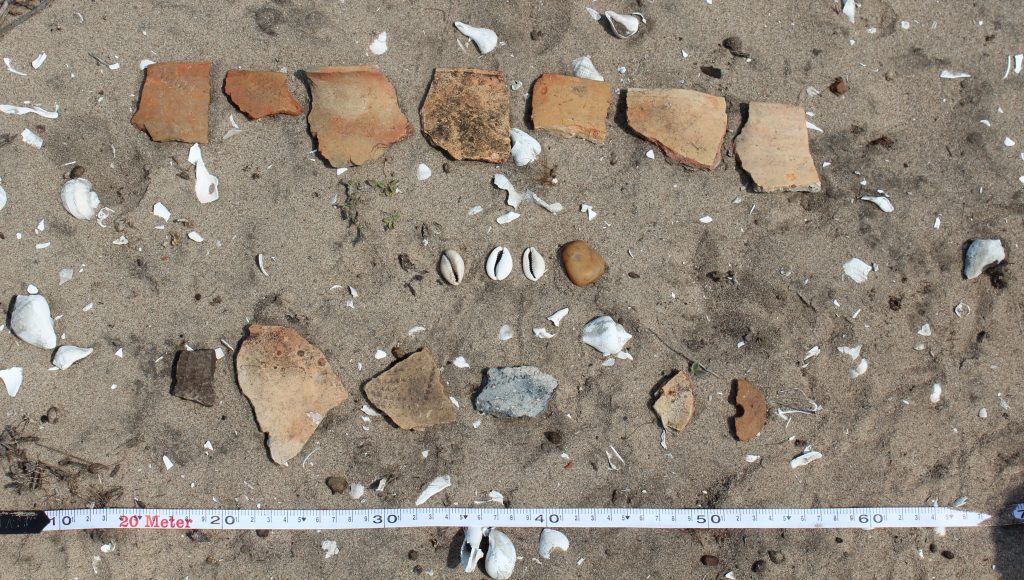
In Mozambique, our collaborators Pedro and Hamido will be busy analysing the ceramics finds we excavated in 2024, working under the supervision of Professor Macamo. This work which will take place in the Museum of Archaeology at Eduardo Mondlane University in Maputo. To facilitate this, the project has contributed equipment to their facilities, which will help to support the continued analysis of archaeological materials.
Already in 2025, our team has had the opportunity to present our work in several academic settings. In January, Scott presented a paper at a conference on Elephant Modernities (the Rewilding Project) in Cologne, Germany. In February, Abigail was invited as a featured speaker by University College London, where she presented our Project and its methodology and aims.
In the coming months, there will be further opportunities to hear Abigail and Scott presenting work from the project. In April, Abigail will be representing the project at an invited talk at the University of Basel, then she and Scott are off to Colorado to present at the Society for American Anthropology conference.
In June, you might spot Abigail at Kiel University, where she is presenting in a biweekly colloquium hosted by the Cluster of Excellence ‘ROOTS – social, environmental, and cultural connectivity in past societies’
Then in July, Abigail and Scott, along with Thomas Biginagwa (University of Dar es Saalam) and Paul Lane (University of Cambridge), will be organising a session titled “Creative approaches to interdisciplinary research practice and dissemination” at the Society for Africanist Archaeologists’ 2025 conference.
Thank You
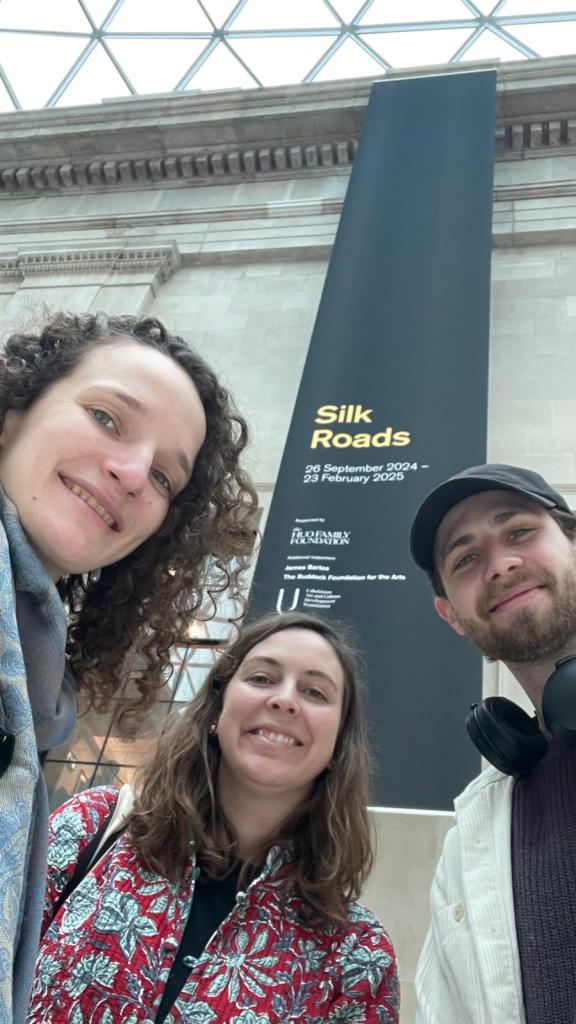
We are especially grateful to Prof. Macamo and the other archaeologists from Eduardo Mondlane University who have been invaluable partners in our fieldwork and research, and whose expertise and support have been invaluable to the success of this project. Similarly, we would like to thank all the project collaborators both at Cambridge and further afield for their support, you have all been instrumental in getting the project set up and running! We are also deeply appreciative of all the local communities and collaborators who have welcomed us and contributed to our work in Cambridge, Mozambique, and elsewhere. The success of this project is truly the result of collective effort, and we look forward to continuing this journey with all of you in the years ahead.
To stay updated on the latest news from the ENTANGLED project, please subscribe to our blog, and feel free to get in touch at entangled@arch.cam.ac.uk – we always welcome your thoughts, questions, and feedback as we continue this exciting research.
 Entangled Project