During our 2024 fieldwork around the Vilankulo area we spoke to various members of local communities about their knowledge of the history of the coast and of the Bazaruto Islands, in both formal interviews and informal conversations. Several times we were told a story about a sandbank in the Vilankulo Bay which one teller ominously named Dead Man’s Island.
Each telling of the story was a little different, but the wider narrative remained similar. Though the exact protagonists and antagonists could change, the protagonists were always broadly remembered as being local communities connected to the sea, either those living on the Bazaruto Archipelago or on the coast of the mainland around what is now Vilankulo. The part of the antagonists was played by either the Nguni or by the Portuguese, and was associated with the people of the mainland.
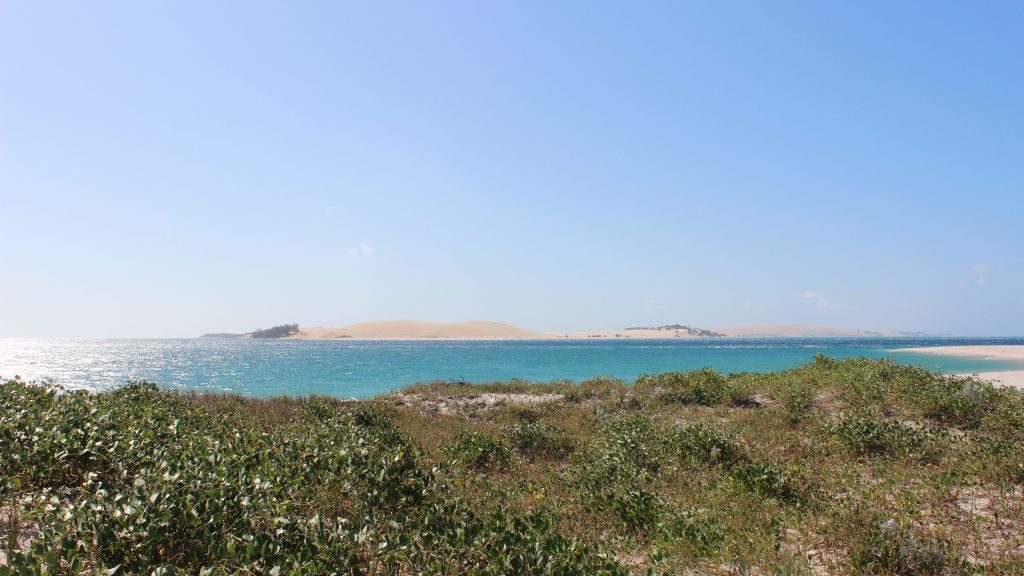
The story took place against the context of conflict in the region around Vilankulo, instigated by either the Portuguese or the Nguni, depending on which version of the story is told. In either case, the aggressors were outsiders to the region, whose arrival brought violence and instability. The coastal and island communities were remembered as fisherman who would regularly trade their catch at the mainland settlements around Vilankulo, and thus despite their orientation towards the sea, the emerging conflicts disrupted their way of life.
The story begins with the aggressors arriving at the coast near Vilankulo. Up to this point, the islands of the Bazaruto Archipelago had remained distant from these mainland conflicts. Yet it was not long before the mainlanders began to desire to travel to the islands, coveting either the safety or the prosperity they offered. Whether this desire was motivated by peaceful settlement or by designs towards conquest is unclear, but their characterisation as violent actors on the mainland seems to imply the latter.
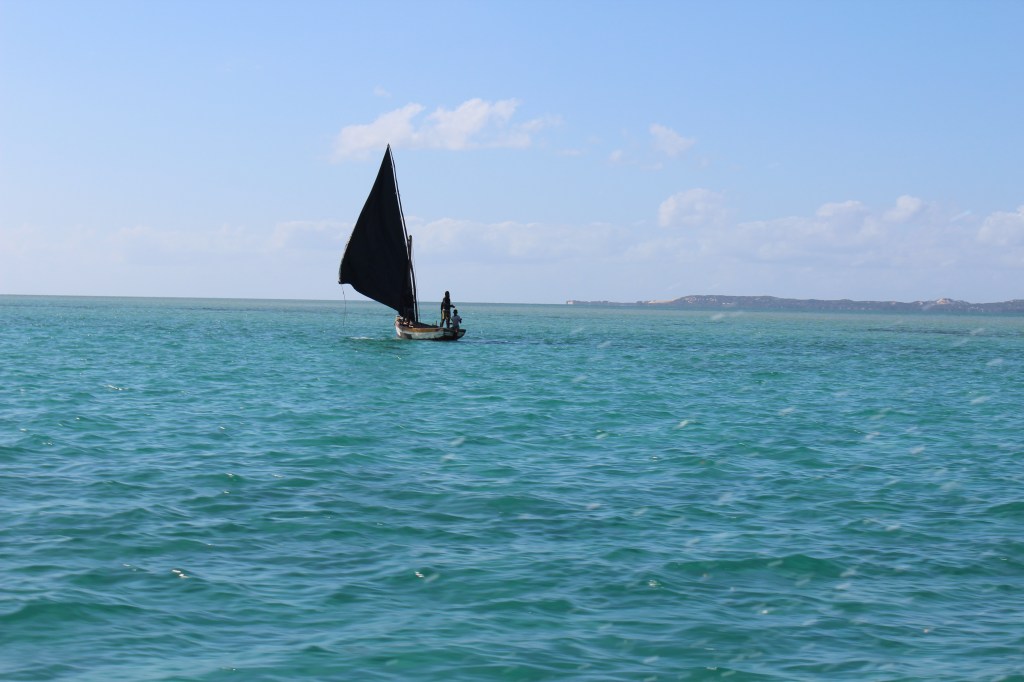
However, the people of the mainland were not sailors, or perhaps had no access to boats, and approached the people of the coast either asking or demanding to be transported to the islands. The coastal communities agreed to grant them passage on their dhows but would do so only at low tide. Once the mainlanders had climbed aboard the dhows, they were brought to a large sandbank between the mainland and Bazaruto, and were told that they could complete the rest of the journey on foot. The sandbank looked as if it extended all the way to the islands, and the unaware passengers were said to have disembarked without protest. The coastal people then departed with their boats, saying that they must return to the mainland to collect more passengers, which they did several times while the tide remained low.
But as the tide began to rise, the islands were clearly no longer reachable on foot, and soon the people of the mainland were surrounded on all sides by the approaching sea. With no knowledge of how to swim, nor access to a vessel to carry them to safety, the people of the mainland were swallowed up by the sea, having been tricked by the coastal people and their knowledge of the tides, and drowned by their desire to reach the safety of the islands. When the tide receded, the bodies of the aggressors were said to have remained on the sandbank, earning it the name Dead Man’s Island.
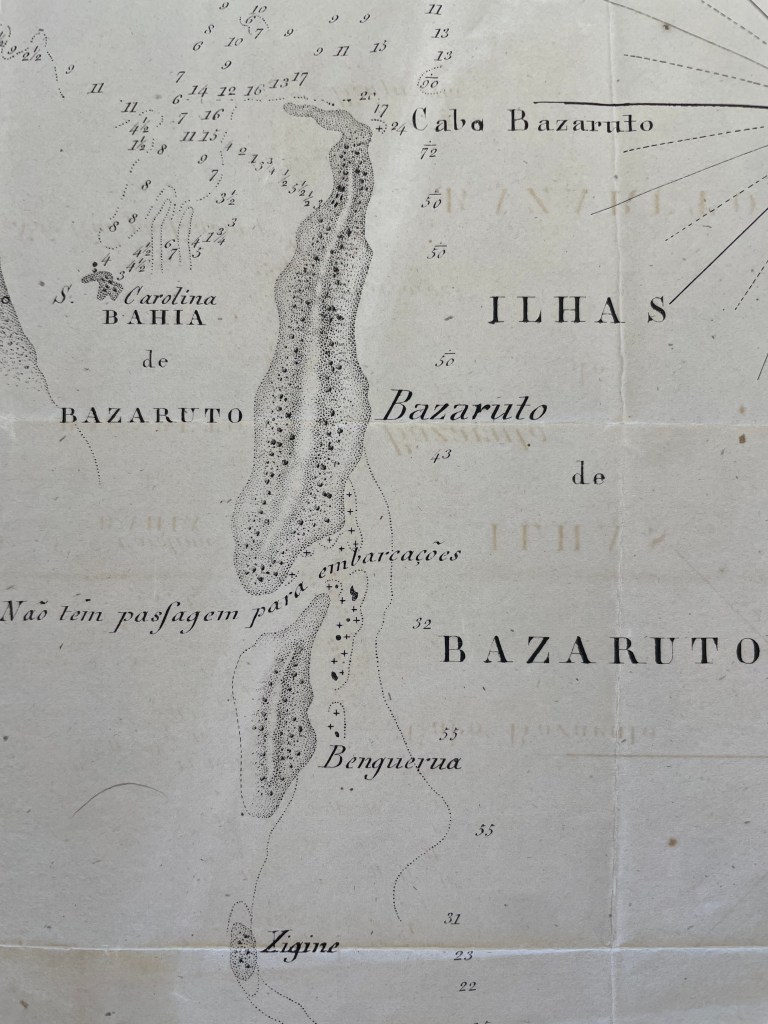
The story is interesting for several reasons. It certainly represents the role of the Bazaruto Archipelago as a place of safety at points during nineteenth and twentieth centuries. Indeed, the Nguni expansion northwards as far as the Zambezi River is remembered as never having reached the islands themselves, while the Portuguese maintained little presence on the islands before middle of the nineteenth century. During the Mozambican Civil War, well over a century later, the islands were also considered safe havens away from the conflicts of the mainland, some of which are remembered as having taken place at the nearby point of São Sebastião. It is possible that the story originated from period of the Nguni expansion, yet it is interesting that the Portuguese have also been included as antagonists in some tellings, particularly given their largely coastal presence in Mozambique until the late nineteenth century. Their inclusion is particularly interesting as the first Portuguese establishments in Southeast Africa were on the islands themselves, not on the mainland coast.
The story captures the place of the islands of the Bazaruto Archipelago within historical memory as spaces that were both connected and separate from the mainland, an association that seems to exist to the present, and as sites of safety which ties in closely to the longstanding historical role of coastal islands along the East African coast – especially at many Swahili sites to the north. The story also speaks to a tradition of resistance in southern Mozambique. It remembers that the people of the region were actively resisting during the conflicts and occupations of the nineteenth century.
 Entangled Project